Commercial Waste Removal Wanstead — Health & Safety Policy
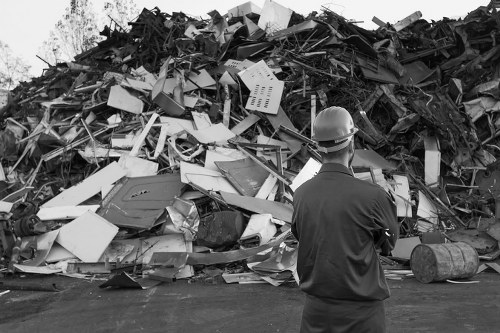 Purpose: This policy sets out the health and safety framework for our commercial waste collection and rubbish removal operations across our service area. It applies to all staff, contractors and on-site representatives engaged in commercial waste collection Wanstead and surrounding locations. The aim is to protect people, property and the environment by defining responsibilities, risk controls and safe working standards for the removal and disposal of business waste.
Scope and responsibilities
All personnel involved in commercial rubbish disposal and waste management activities will follow this policy. Managers hold responsibility for implementing controls, supervisors for day-to-day checks and employees for working safely and reporting hazards. Contract partners engaged in commercial waste collection services are required to meet the same standards and to cooperate with monitoring and auditing.
Commitment to compliance
We commit to meeting all relevant health and safety legislation and industry best practice for routine and specialist commercial waste removal. This includes safe handling of bulk refuse, segregation of recyclable materials and secure containment during transport. Records of training, vehicle checks and incident reports are maintained to ensure accountability and continuous improvement.Risk assessment and control measures — Before any commercial rubbish removal task, a written risk assessment must be completed by a competent person. Controls include:
- site-specific hazard identification for loading/unloading;
- manual handling assessments and mechanical aid use for heavy loads;
- traffic management and safe access for vehicles;
- PPE requirements including gloves, hi-vis and foot protection;
- procedures for handling hazardous or unknown waste streams.
Supervisors will ensure that operational briefings are provided at the start of shifts and whenever task conditions change. Emergency plans are in place for spill response, injury, fire, or road traffic incidents, with clear roles and communication lines.
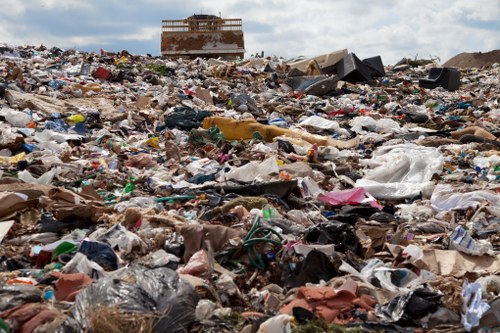 Training and competence — Employees receive training in safe lifting, vehicle operations, waste segregation and hazardous materials awareness. Records of qualifications and refresher training are kept centrally. New starters undergo induction covering company rules, safe systems of work and the correct use of equipment and PPE.
Vehicle and equipment safety
All collection vehicles and equipment are subject to planned maintenance and pre-start checks. Drivers and operators must log defects and remove unsafe vehicles from service until repaired. Lifting equipment and tail-lifts are inspected regularly and operated only by trained personnel. Loading limits are enforced to prevent overloading and instability.Waste segregation and environmental controls
We enforce segregation policies to reduce contamination and promote recycling from commercial sites. Special streams such as electronic waste, chemicals and asbestos will be handled by authorised specialists. Spill kits and containment measures are carried in vehicles to prevent pollution incidents and to protect public health.Monitoring includes internal audits, site inspections and performance reviews. Non-compliances trigger corrective actions and, where necessary, disciplinary measures. Safety performance is reported to senior management to ensure continuous resourcing and improvement.
 Incident reporting and investigation — All accidents, near misses and hazardous exposures must be reported immediately. Investigations aim to identify root causes and to implement actions to prevent recurrence. Lessons learned are shared across the company to update risk assessments, procedures and training.
Health surveillance is provided where work activities give rise to occupational exposures such as dust, noise or chemical contact. We also promote employee wellbeing initiatives to address manual handling strains and fatigue, recognising that a healthy workforce is key to safe commercial waste operations.
 Review and continuous improvement — This policy is reviewed at least annually or following significant incidents, operational changes or legislative updates. We encourage a safety culture where staff are empowered to raise concerns and suggest improvements. Regular feedback from site inspections and operational data helps refine procedures to ensure our commercial rubbish removal service area operates with the highest standards of health, safety and environmental protection.
Key obligations: Employees must follow safe systems of work, report hazards, attend training and use required PPE. Managers must provide resources, enforce compliance and lead by example. Contract partners must demonstrate equivalent standards before engagement.
Communication — Safety information is communicated through briefings, written procedures and signage. Important changes are highlighted to ensure clear understanding across operational teams handling commercial waste collection and disposal.
Final statement: This Health and Safety Policy provides the framework to manage risks associated with commercial waste removal and rubbish collection. It is integral to our commitment to protect staff, customers, the public and the environment and to deliver responsible, professional refuse and recycling services across our service area.
